
Criminal Court Cases in Macon County
Macon County criminal court cases belong to North Carolina's General Court of Justice. District Court hears misdemeanors, infractions, and the early steps in felony matters. A felony may move to Superior Court after indictment or another valid charging route. Both divisions use the Macon County Courthouse in Franklin. Franklin and Highlands have no separate municipal criminal courts, so town charges also enter this state system.
The elected Clerk of Superior Court is custodian for public District and Superior Court case files. That makes the clerk the key source for paper records, certified copies, archived matters, and questions about an online entry. The District Attorney prosecutes cases in both trial divisions. Magistrates handle initial process, probable-cause issues, and release decisions. A complainant cannot erase a filed charge; only a prosecutor or judge can dismiss it through the court process.
Macon County Court Levels Compared
The charge class points to the court path, but it does not tell the whole outcome. North Carolina classifies felonies from A through I and misdemeanors from A1 through 3. The sentence turns on more than that label, including prior record level and the applicable sentencing range. Portal users should read the charge, court assignment, events, and judgment together.
| Macon court level | Criminal work | Record clue |
|---|---|---|
| District Court | Misdemeanors, infractions, and preliminary felony steps | Early hearings and release-related events may appear here |
| Superior Court | Felony trials, pleas, judgments, and related proceedings | Felony assignment follows indictment or another proper charging path |
| Clerk of Superior Court | Maintains public files for both divisions | Provides paper, archived, and certified court records |
The North Carolina Judicial Branch criminal-case explanation shows how these divisions split the work. The official process image below reinforces that a Macon County case can change court level while remaining under one clerk's record custody.
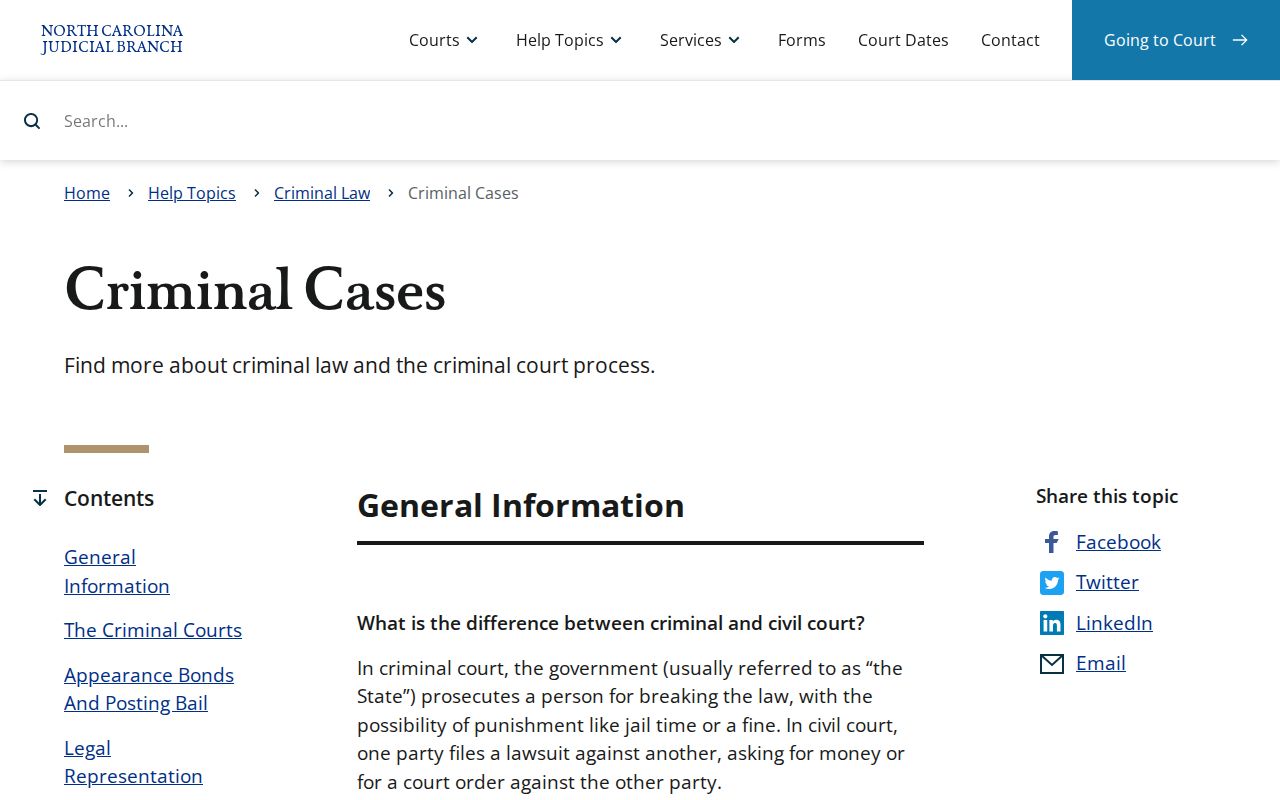
That court-level split is why a District Court entry should not be treated as proof that a felony matter ended there.
Macon County Case Record Searches
North Carolina eCourts Portal gives free anonymous access to case information. Registration is optional unless a user wants to save matters in “My Cases.” Search by party name or a CR case number, then limit Location to Macon County and Case Category to Criminal Actions. Search Hearings is a separate Portal tool for dates, rooms, attorneys, and judicial officers. Portal data is informational. For an older case, a missing document, or an official copy, use the courthouse terminal or contact the clerk.
- Open Smart Search and enter a party name or criminal case number.
- Set Location to Macon County and Category to Criminal Actions.
- Narrow the result with case type, status, birth date, or filing dates when appropriate.
- Open Case Summary and review actions, events, dispositions, hearings, and financial information.
- Confirm the hearing in Search Hearings, then request paper or certified records from the Macon clerk if needed.
The official Portal training resources explain wildcard rules and the available filters. The image below captures the state court system's search guidance used for a Macon County court case lookup.
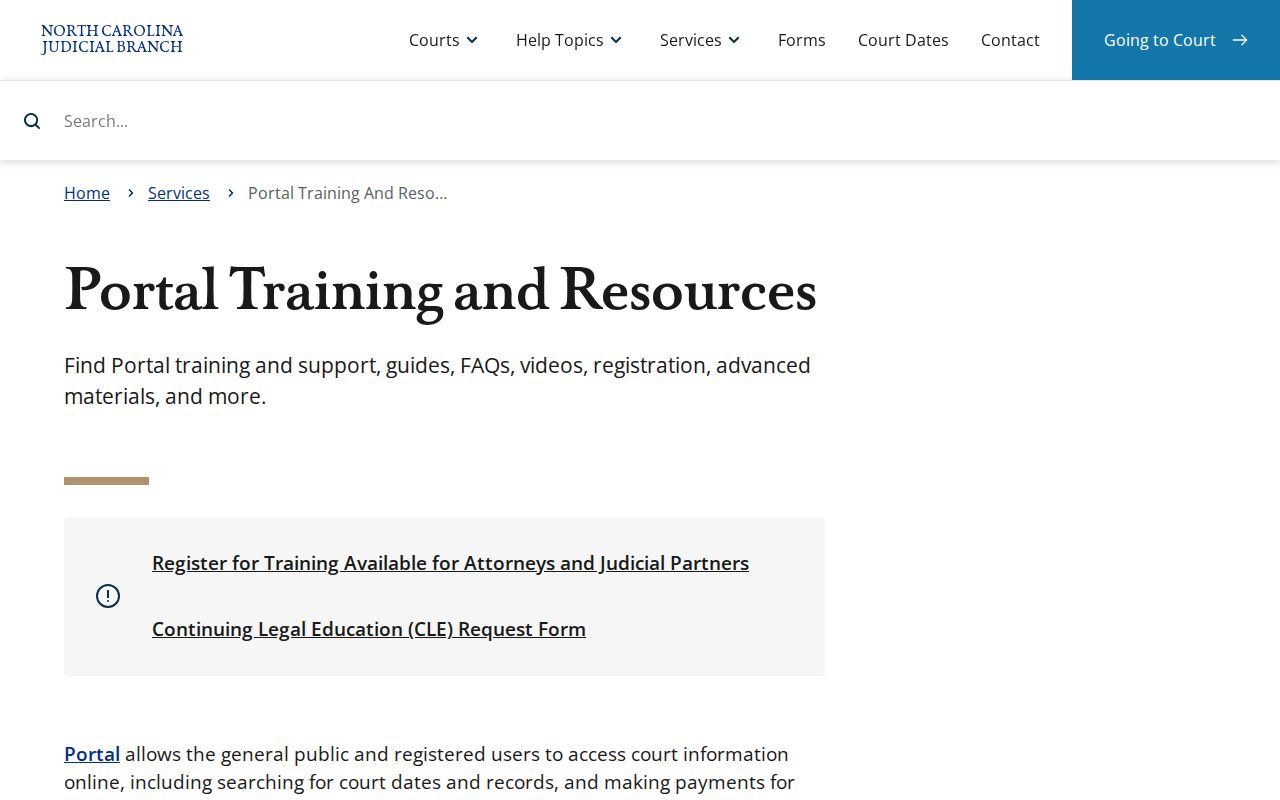
Careful filters matter because a broad name query can return cases from other counties or people with similar names.
| Field or control | Type | Required | Search use |
|---|---|---|---|
| Smart Search input | Text | Yes | Party name or case number |
| Location | Multi-select | No | Choose Macon County for local results |
| Case Category | Filter | No | Select Criminal Actions |
| Date of Birth | Date | No | Narrows party results; public display may be limited |
| Case Type and Status | Dropdowns | No | Narrows case class and open or disposed status |
| Filing Date From/To | Dates | No | Limits the filing period |
| Search Hearings | Separate module | No | Checks dates, courtroom, parties, counsel, or judge |
For wildcards, enter at least four case-number characters before an asterisk. A last name needs at least three characters before the asterisk, while a first name needs at least one. Advanced Party Name mode can limit results and does not handle wildcards as expected.
Reading Macon County CR Numbers
A North Carolina case number carries useful structure. The official format uses a two-digit year, letters, a six-digit sequence, and a three-digit county identifier, such as 21CR000003-910. The letters CR mark a criminal case. A CR file may contain both crimes and infractions. The letters IF mean the case is infraction-only, so “CR” should never be read as shorthand for felony.
- Register of Actions
- The dated docket of filed process, hearings, continuances, pleas, judgments, and later events.
- Disposition
- The outcome of a charge, such as conviction, acquittal, or dismissal.
- Indictment
- A grand jury's formal felony accusation, often called a true bill when approved.
- Arraignment
- The stage when charges and the defendant's plea are addressed.
One case can contain several charges with different outcomes. Read each Criminal Actions row and its disposition rather than relying on the case status alone. North Carolina Judgment Search offers a narrower index view with a case number, disposition status, index date and time, parties, and comments. Return to Smart Search for the fuller case summary. A dismissed count does not erase the rest of the docket, and a pending status is not a finding of guilt.
What a Criminal Case File Contains
The Macon County case file is organized around the prosecution, not the jail intake. Portal commonly displays a case header, parties, counsel, criminal actions, events, hearings, dispositions, and financial data. It may show costs, restitution, appointed-attorney fees, or supervision obligations when those apply. The online entry does not guarantee a free image of every filed document. Signed judgments and certified copies remain clerk services.
| Case Number & Court | Identifies the file, Macon location, division, type, filing date, and status. |
|---|---|
| Charging Document | Shows the formal charge source, offense description, statute, code, and class where entered. |
| Docket Entries | Lists filed process, continuances, pleas, judgments, and later Register of Actions events. |
| Hearing Dates | May list date, time, room, hearing type, and judicial officer. |
| Disposition & Judgment | Records the outcome of each charge and the court's final judgment. |
| Sentence & Conditions | Can show custody, probation, restitution, costs, or other ordered terms. |
A booking record has a different focus: custody, identifying information, charges at intake, and bond. The Macon County arrest search covers that earlier record layer, while the court file shows what prosecutors filed and how the judge resolved it.
When Macon Court Search Falls Short
Call the Macon County Clerk of Superior Court when Portal omits an old case, lacks a document image, or shows an entry that needs context. The clerk maintains paper and archived records for cases filed in Macon. The Judicial Branch describes public self-service terminal and paper-file access; terminals at any North Carolina courthouse can search by defendant, case number, victim, or witness. Results may be emailed without charge, though printing can carry a cost. A certified Macon-only name search uses Form AOC-CR-314 and costs $25. Mail requests accept a certified check or money order, not a personal check. At the counter, accepted methods include cash, card, certified check, or money order. This service searches Macon court records only. It is not an SBI fingerprint history or a statewide arrest search.
Macon County Clerk of Superior Court
5 W. Main Street
Franklin, NC 28734
828-349-7200
Monday through Friday, 8:00 a.m. to 5:00 p.m.
The Judicial Branch court-record search page compares certified clerk searches with free public terminal access. The SBI's background-check channel comparison also routes public name searches to the clerk rather than an SBI name portal. The image below helps distinguish the official clerk product from a quick Portal result.
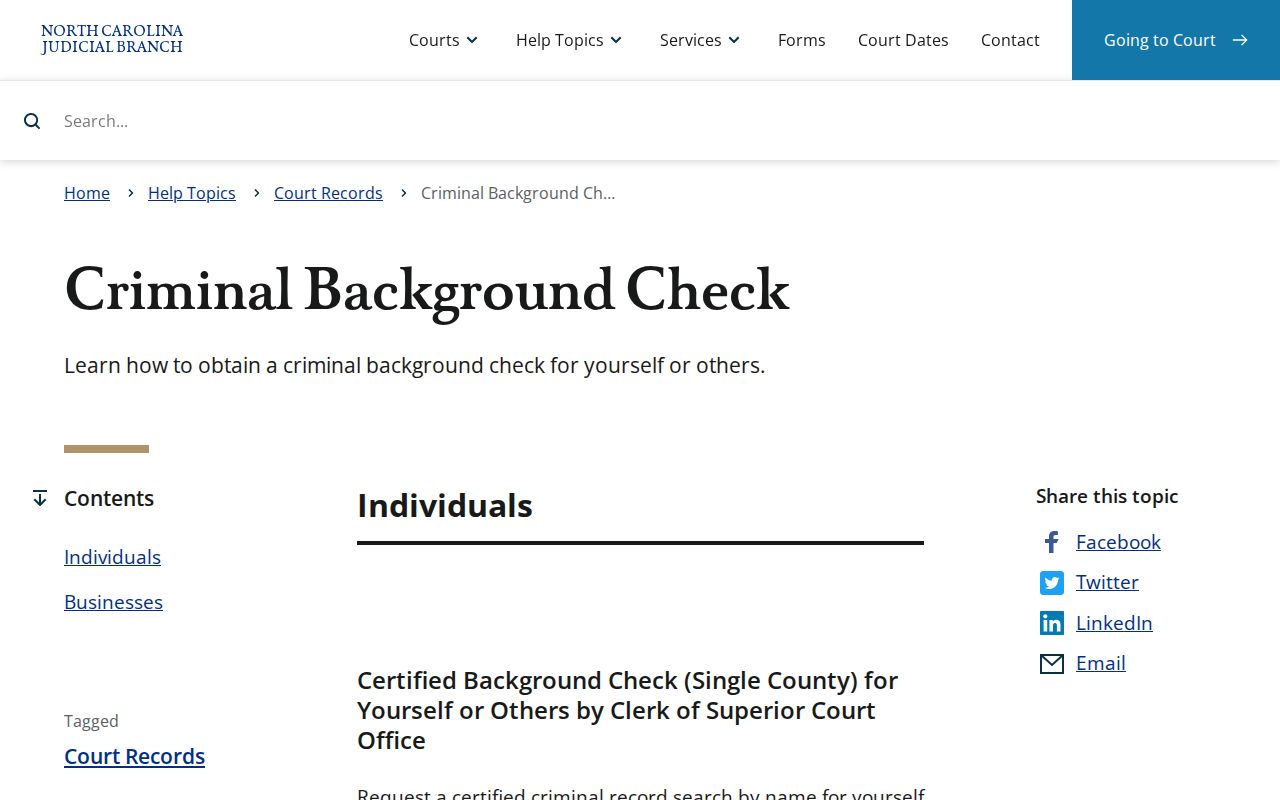
Use the certified route when the authenticity of the Macon County court record matters, and ask for the signed source document behind any key docket entry.
Criminal Case Stages in Macon County
A Macon County criminal case can begin with an arrest, citation, or magistrate process. The judicial official addresses initial process, probable cause, and release. Misdemeanor proceedings remain in District Court. A felony receives preliminary District Court work before indictment or another proper route brings it into Superior Court. There, arraignment and pretrial events lead to a plea or trial. Judgment, sentence, and any appeal follow.
Case flow: Charges Filed › Arraignment › Pretrial › Plea or Trial › Disposition › Sentencing
The formal charge in the court file can differ from the arrest allegation. Prosecutors assess what the evidence supports, and the court tracks amendments or dismissals in the docket. The final disposition must be read at the charge level. An arrest alone does not establish guilt, and a case summary may change as events are entered.
Macon County eCourts Turning Point
The Judicial Branch's western eCourts rollout notice records Macon County's move to Enterprise Justice, also called Odyssey, on July 22, 2024, with ten other western counties. The change brought electronic case files and Portal access to a rural, multi-county court region. Statewide conversion finished October 13, 2025. Online access now reduces some travel, but the Macon County clerk remains the authoritative source for filed documents and certified records.
The county court schedule still reflects mountain geography. An official 2025 Superior Court order paired Macon and Swain for certain administrative sessions. Court dates can also shift during extraordinary closures, as western North Carolina saw after Hurricane Helene. Confirm current dates rather than relying on a saved result.
The official Macon County court page links calendars, court-date tools, local services, and active notices. The image below provides a county-specific route back to those current court resources.
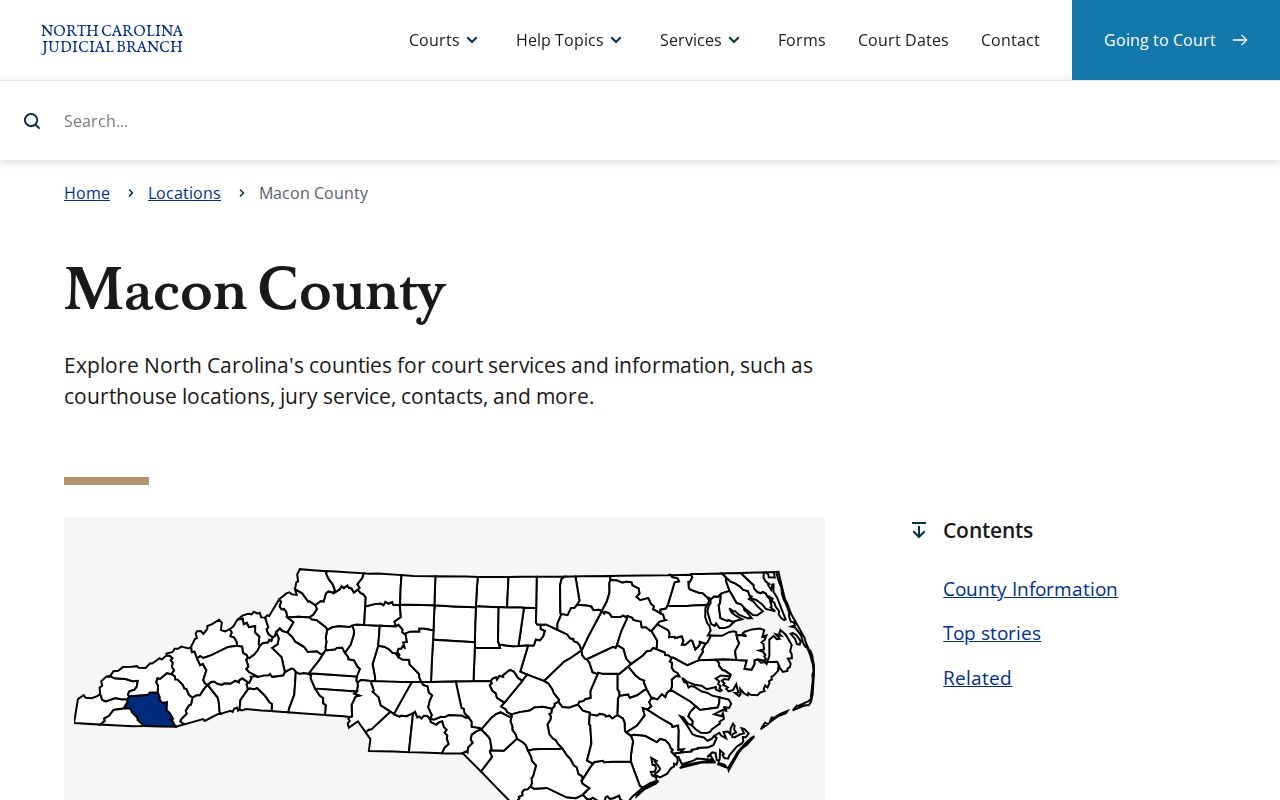
Checking the county page alongside Search Hearings helps separate a filed docket event from the latest operational schedule.
Access Rules for Case Records
North Carolina law generally keeps clerk court records open to inspection. G.S. 7A-109 sets that clerk-access rule, subject to other laws and electronic-access limits. Portal registration does not unlock confidential material. Ordinary public views exclude confidential juvenile matters, unreturned warrants, protected identifiers, and records removed from public view by expunction.
Access point: Portal supplies public case information, while the Macon clerk controls paper inspection, certified copies, and questions about restricted or archived files.
Public access also differs from law-enforcement disclosure. Under North Carolina Public Records Law, investigative files are generally not public even when basic incident and arrest facts must be disclosed. A court docket is not the police narrative. Ask the agency that holds the exact record, and do not expect a custodian to create a new compilation. The Judicial Branch public-record request form routes administrative records, while criminal case files and certified copies still go to the Macon clerk.
Macon Court Dismissals and Expunctions
A dismissal ends a charge without a conviction, but it does not by itself remove every public trace. The docket may still show that the case existed. North Carolina uses outcome-specific expunction statutes, so eligibility depends on the result, age at offense, offense class, and prior history. “Expunction” and “expungement” refer to the same record-clearing concept here.
Petitions are filed with the Macon County Clerk of Superior Court because the case arose in this county. Some dismissed or not-guilty petitions have no filing fee, while the general filing fee for many other petitions is $175. The correct AOC form and current instructions control. Some paths require affidavits, prosecutor notice, record checks, and a hearing before the judge can enter an order.
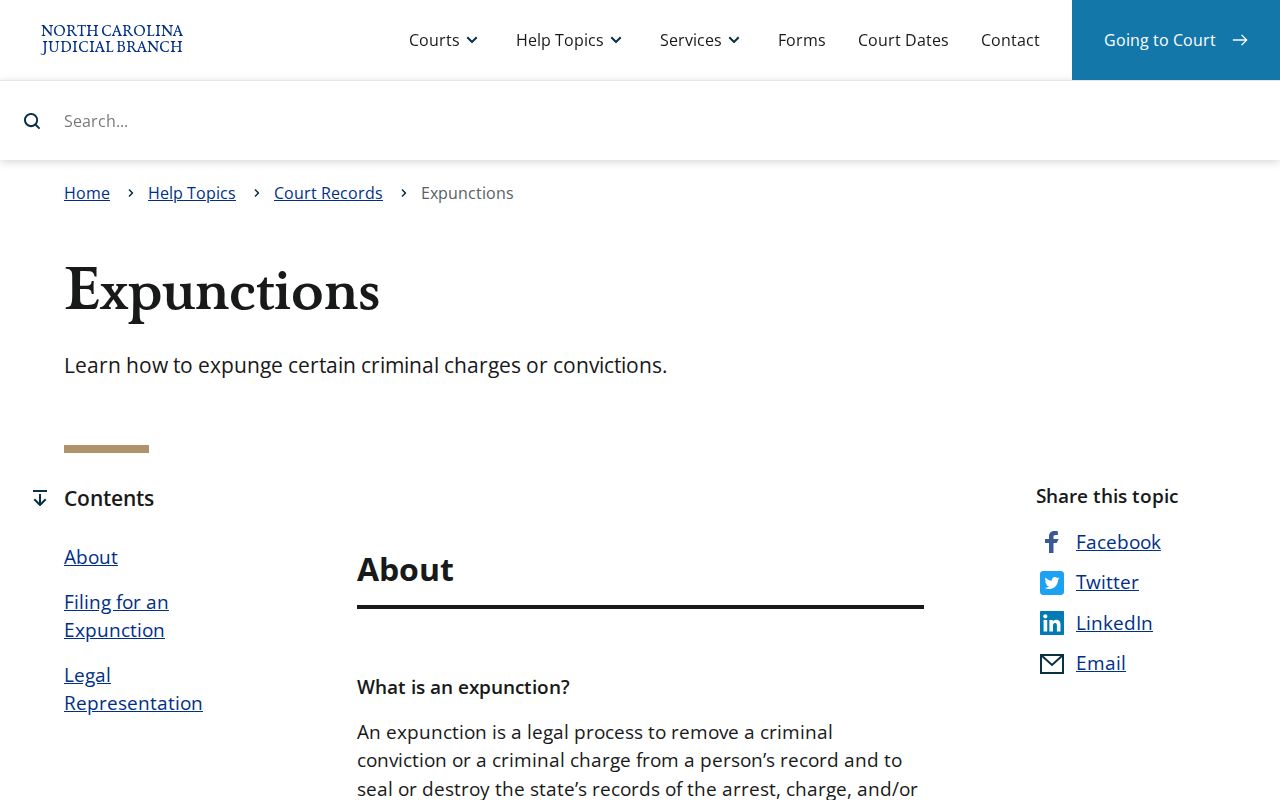
The Judicial Branch expunction resource explains eligibility, fees, and the county filing process, while its official expunction form catalog supplies the current petition families. The image below connects the Macon County court file to that official route for seeking lawful removal.
If an order is granted, the clerk distributes it to listed agencies. Later checks should confirm that the Macon docket and affected state records reflect the order.